Best budget 4K TV in 2026: the best value for the money
Best value 4K TV in 2026: TCL QM6K vs Hisense U7SG vs TCL QM7L. Mini-LED picks compared on dimming, refresh rate, HDMI and when to pay more.
Research guide based on published sources, not hands-on testing. How we checked | How links work
The short answer
For most people the best value 4K TV right now is the TCL QM6K. It is the oldest and usually the cheapest of the three, and it gives you Mini-LED local dimming, a 144Hz panel and Google TV. Pay more for the Hisense U7SG if you game on several consoles or watch in a bright room. Choose the TCL QM7L if you want more brightness for HDR films and can find it on sale. Not sure about size? Use our TV size by distance tool first.
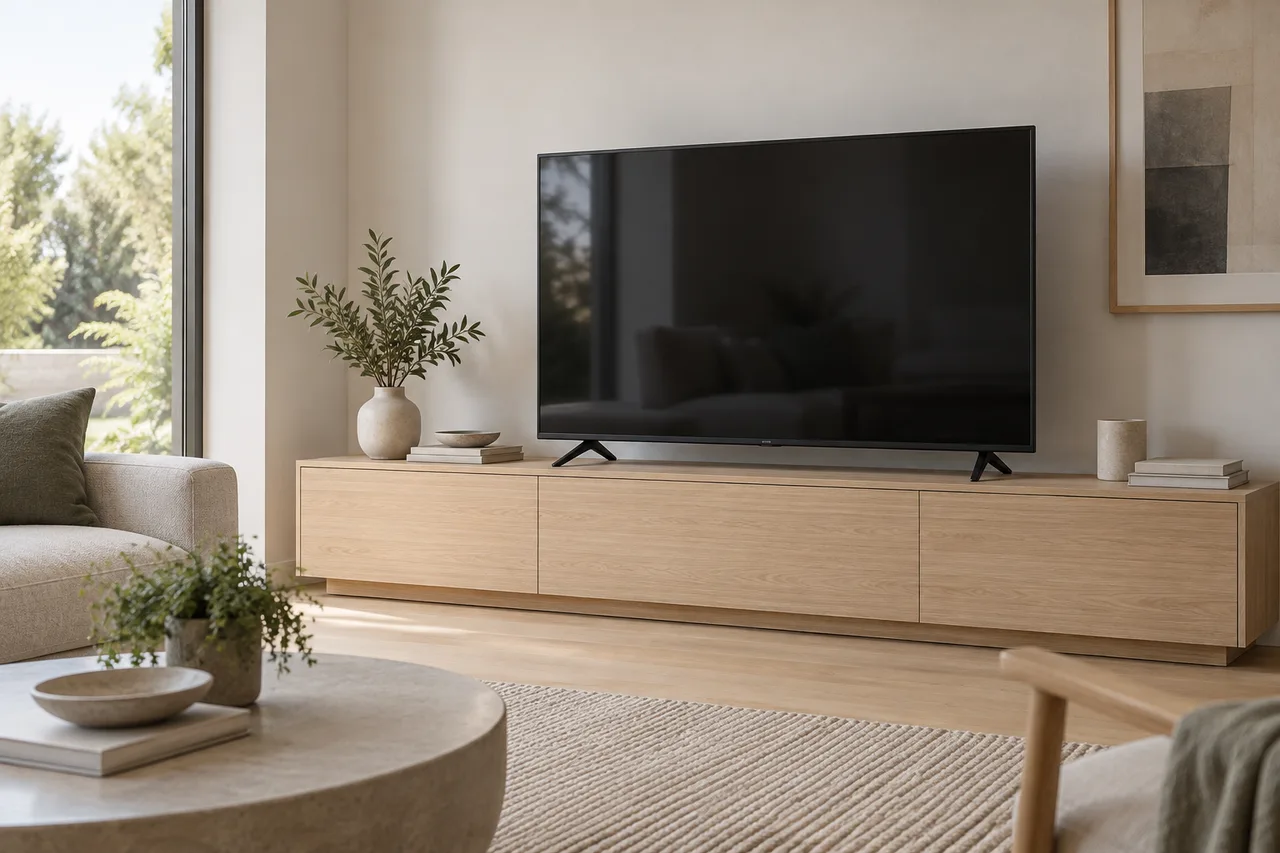
Short answer: for most people the best value 4K TV right now is the TCL QM6K. It is the oldest and usually the cheapest of the three, and it gives you Mini-LED local dimming, a 144Hz panel and Google TV. Pay more for the Hisense U7SG if you game on several consoles or watch in a bright room. Choose the TCL QM7L if you want more brightness for HDR films and can find it on sale. Not sure about size? Use our TV size by distance tool first.
This is a research guide built from manufacturer specifications and published reviews. We did not test these TVs ourselves. Prices change often, so compare the live price for your size before you buy.
Who each TV suits
- TCL QM6K: most living rooms, streaming, sport and casual 120Hz console gaming, at the lowest price for Mini-LED in this set.
- Hisense U7SG: gamers with three or more fast devices (four HDMI 2.1 inputs), and rooms with windows facing the screen.
- TCL QM7L: film and HDR fans who can darken the room and want more brightness and dimming zones.
Which budget 4K TVs are worth it in 2026?
| TCL QM6K | Hisense U7SG | TCL QM7L | Source | |
|---|---|---|---|---|
| Model year | 2025 range, still sold | 2026 | 2026 | 1 2 3 4 5 6 |
| Backlight | QD-Mini LED | Mini-LED | SQD-Mini LED | 1 2 3 4 5 6 |
| Dimming zones | Up to 500 | 512 (55-inch) | Up to 2,100+ (varies by size) | 1 2 3 4 5 6 |
| Peak brightness (maker claim) | Not stated per size | Up to 2,000 nits (55-inch) | Up to 3,000 nits (top sizes) | 1 2 3 4 5 6 |
| Native refresh rate | 144Hz | 165Hz | 144Hz | 1 2 3 4 5 6 |
| HDMI inputs | 4 (TCL does not list how many are HDMI 2.1) | 4, all HDMI 2.1 | 2 high-bandwidth inputs, per Tom’s Guide | 1 2 3 4 5 6 |
| Smart platform | Google TV | Google TV | Google TV | 1 2 3 4 5 6 |
| 55-inch price | Check live price | Series MSRP from $1,299, often discounted | Check live price | 1 2 3 4 5 6 |
Sources: TCL QM6K, TCL QM7L, Hisense 55U7SG and its spec sheet, and the Hisense 2026 range announcement.
What is the best 4K TV for the money?
The TCL QM6K. It is a year older than the other two, and that is why it is cheap: you get the key hardware that makes HDR look better than a basic LED TV (Mini-LED backlight with local dimming and quantum-dot color) at a price close to entry-level sets. Its 144Hz panel also covers 120Hz console gaming.
The trade-off is fewer dimming zones than the step-up models, so bright objects on dark backgrounds can show more glow. For everyday TV, streaming and sport in a normal living room, that is the compromise most buyers can live with.
When is the Hisense U7SG worth paying more?
When you connect more than two fast devices. The 55U7SG has four HDMI 2.1 inputs and a 165Hz panel, while the QM7L has two high-bandwidth inputs, according to Tom’s Guide’s comparison. If you have a PlayStation, an Xbox and a gaming PC, that difference matters more than any brightness figure.
Hisense also lists a low-reflection panel, which helps in rooms with windows facing the screen. Its list price is high, but retailers have sold it well below MSRP, so compare the live price before you decide.
When is the TCL QM7L the better choice?
When you mainly watch films and HDR series in a room you can darken. TCL claims up to 3,000 nits and more than 2,100 dimming zones for the range, which is a big step above the QM6K. Those are top figures for the larger sizes, so check the numbers for the exact size you buy.
It usually costs more than the QM6K at the same size. If the gap at your size is large, the QM6K is the better value.
What size should you buy?
Size depends on how far you sit, not on the room size. As a rough guide, 55 inches suits about 5.5 to 7.5 feet of viewing distance and 65 inches about 6.5 to 9 feet (based on the 30 to 40 degree viewing angles our calculator uses). Our TV size by distance tool gives a range for your exact distance.
What should you check before you buy?
- The exact model number. Specs differ by size and by country. A 55-inch and an 85-inch from the same series can have very different zone counts.
- The smart platform. All three picks run Google TV. Hisense also sells the U7 with Fire TV as the U7SF.
- The price history. These TVs are discounted often, especially around Black Friday. A “sale” price is only a deal if it is lower than the usual price of recent weeks.
- Returns and delivery. Check how the retailer handles a damaged panel and what the return window is.
Quick pick: which budget 4K TV should I buy?
Answer two questions. This replaces our old three-question quiz and uses the same rules.
| If | Pick | Why | Source |
|---|---|---|---|
| More than two fast gaming devices, or a bright room with windows facing the screen | Hisense U7SG | Four HDMI 2.1 inputs, 165Hz and a low-reflection panel | 6 |
| Mainly films in a room you can darken, with budget for a step up | TCL QM7L | More dimming zones and higher rated brightness for HDR | 6 |
| Everything else | TCL QM6K | Mini-LED, 144Hz and Google TV, usually the lowest price of the three | 6 |
What does “best value 4K TV” mean here?
Value means features that change the picture for the money you pay today, not the longest spec sheet. For this guide that is Mini-LED local dimming, a refresh rate that covers console gaming, enough HDMI inputs for your devices, and a dated price from a store you can open. Brightness claims and zone counts help, but they vary by screen size and are easy to over-weight.
If you only need a bright room for daytime news and sports, a cheaper edge-lit LED can still be fine. The three picks in this guide assume you want HDR films and series to look clearly better than a basic LED set without jumping to OLED money.
For a quick shortlist based on room brightness and how many consoles you own, use the quick pick above. For seating distance, use the TV size by distance tool.
FAQ
What is the best affordable 4K TV in 2026?
Based on manufacturer specs, the TCL QM6K offers the most features for its usual price: Mini-LED dimming, 144Hz and Google TV. Confirm the live price for your size.
Is Mini-LED worth it on a budget TV?
Usually yes. A Mini-LED backlight with local dimming can dim parts of the screen independently, which improves contrast in HDR content compared with a TV that has a single edge or direct backlight.
Do I need 144Hz or 165Hz?
Only for gaming. Films and TV shows do not use refresh rates above 60Hz. Consoles can output up to 120Hz, and PCs can go higher.
Are last year’s TVs a good buy?
Often they are the best value, because prices drop when new models arrive. Check that the older model still gets software updates and that you are comparing the same screen size.
What is the best value 4K TV in 2026?
The TCL QM6K. As the older series it is usually the cheapest of the three, and it packs Mini-LED dimming and 144Hz closer to entry-level money than the step-up Hisense U7SG or TCL QM7L.
Is the Hisense U7SG better value than the TCL QM6K?
Only when you need four HDMI 2.1 inputs or a brighter, low-reflection panel and the live U7SG price is close enough that the gap feels worth it. At list price it is not the value pick. Compare the checkout price for the size you want.
Tools for this decision: TV size by viewing distance, How many HDMI ports do I need?.
Method: how we checked this guide
This is a research guide, not a hands-on test. We have not bought or measured these products.
Specifications come from the pages under Sources, almost all of them the makers' own. Where a figure comes from anyone else, the table or text names them. Where we compare two figures we compare like with like, for example rated battery life in the same mode.
Where a maker gives no figure we leave it out rather than estimate it.
Our general rules are in the editorial policy.
Sources
Changes
- : First published in its current, research-based form.
- : Added a source column to every table, numbered sources, a method section and this change log. No figures changed.
Product details
Specifications below are manufacturer claims. Availability, regional versions and prices can change; check the exact model before buying.
TCL QM6K (55QM6K, 2025 range)
The lowest-priced Mini-LED Google TV range on TCL's US store, still on sale through 2026.
- Panel
- 4K QD-Mini LED, native 144Hz
- Local dimming
- Up to 500 dimming zones (varies by size)
- HDR
- Dolby Vision IQ, HDR10+, HDR10, HLG
- Platform
- Google TV
This is a 2025 range, so retailers often discount it. Zone counts and brightness differ by size; check the exact size you buy.
Manufacturer detailsHisense U7SG (55U7SG, 2026)
Hisense's 2026 Mini-LED Google TV with a 165Hz panel and four HDMI 2.1 inputs.
- Panel
- 4K Mini-LED, native 165Hz, low-reflection panel
- Local dimming (55-inch)
- 512 zones, up to 2,000 nits peak brightness
- Inputs
- Four HDMI 2.1, eARC on HDMI 3
- HDR
- Dolby Vision IQ, HDR10+ Adaptive, HDR10, HLG
- Platform
- Google TV (Fire TV version sold as U7SF)
- Price
- Series MSRP from $1,299; retailers often sell below this
The 3,000 nit figure on Hisense's page applies to larger sizes; the 55-inch spec sheet lists up to 2,000 nits.
Manufacturer detailsTCL QM7L (2026)
TCL's entry model in its 2026 SQD Mini-LED range, a step up in brightness and dimming zones.
- Panel
- 4K SQD-Mini LED, 144Hz
- Brightness and dimming
- Up to 3,000 nits and 2,100+ zones (top figures; vary by size)
- HDR and sound
- Dolby Vision IQ, Dolby Atmos
- Platform
- Google TV
TCL's headline brightness and zone counts are 'up to' figures for the range. Smaller sizes can have fewer zones.
Manufacturer details