Appliance energy cost calculator (Germany and Japan)
How much does an appliance cost to run? Enter watts and hours to get the yearly cost in euros or yen, using sourced 2026 electricity prices.
Calculator using published average electricity prices. How we research · How links work
The short answer
Yearly cost = watts x hours a day x 365 / 1,000 x price per kWh. At the German average of 38.9 cents per kWh, a 100 watt device used 4 hours a day costs about €57 a year. At Japan's reference price of 31 yen, the same use costs about ¥4,526.
Your running cost
Cost per year
-
-
Example running costs
| Example | kWh a year | Germany (38.9 ct) | Japan (31 yen) |
|---|---|---|---|
| Wi-Fi router, always on (10 W) | 88 | €34 | ¥2,716 |
| 55-inch TV, 4 hours a day (100 W) | 146 | €57 | ¥4,526 |
| Gaming PC under load, 3 hours a day (400 W) | 438 | €170 | ¥13,578 |
| Space heater, 4 hours a day (2000 W) | 2920 | €1136 | ¥90,520 |
Wattages are round example figures. Download the price data: CSV · JSON.
Measure it yourself
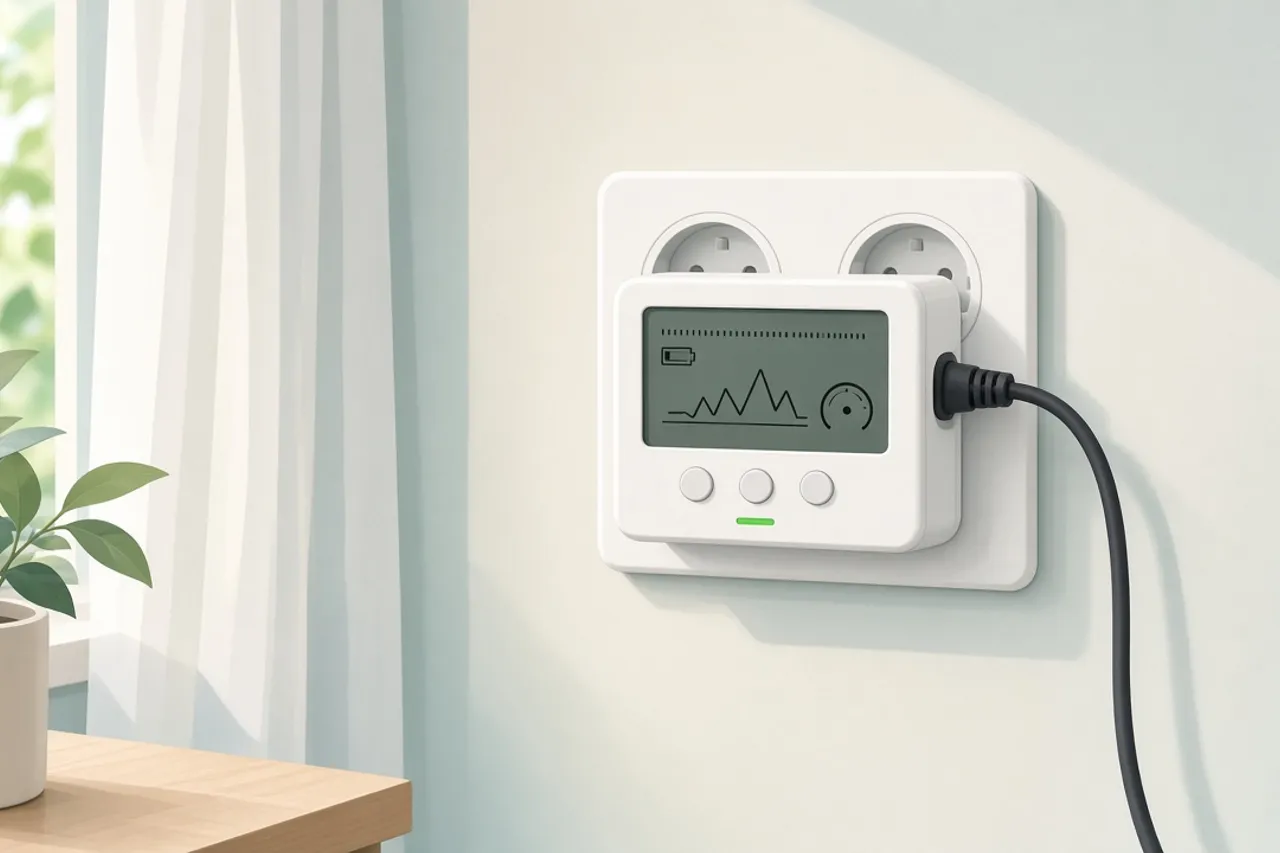
A plug-in energy meter shows the real draw of a device, including standby.
Common questions
How do I calculate the running cost of an appliance?
Multiply the power in watts by the hours of use per day and by 365, divide by 1,000 to get kWh a year, then multiply by your price per kWh.
What does a kWh cost in Germany?
The BDEW industry association puts the average household price for new contracts at 38.9 cents per kWh (as of 7 October 2026, 3,500 kWh a year). Your own contract may differ.
What does a kWh cost in Japan?
Appliance labels in Japan use a reference price of 31 yen per kWh including tax, set by the Japan Fair Trade Council of Home Electric Appliances. Actual prices vary by region and contract.
Where do I find the wattage?
On the rating label or in the manual. The label shows maximum power; typical use is often lower, so a plug-in energy meter gives a more accurate figure.